
What Happens To Sanitation During A Largo Emergency?
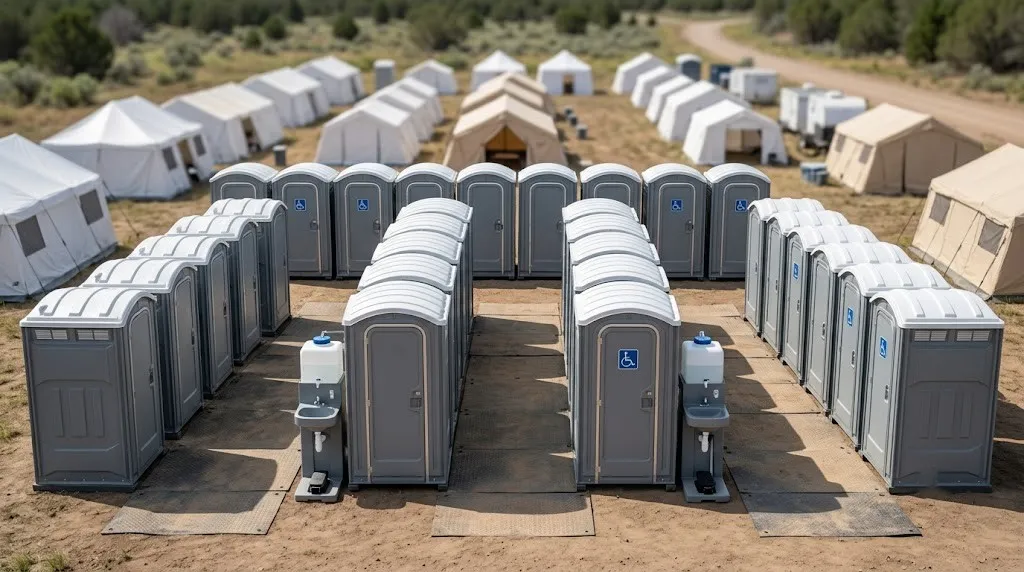
Flooding, hurricane aftermath and grid failures take out septic pumps and running water fast, and that's exactly when emergency porta potty rental calls spike. A home or worksite that loses power loses its lift station too, and a septic system with no pump running backs up quick. Largo Porta Pros treats these as same-day priorities, not next-week bookings. We stage standard porta potty rental units, portable restroom rental trailers and backup handwashing station rental equipment for exactly this kind of call.
OSHA 1926.51(c)(1) sets the baseline even in a crisis: one toilet for every 20 people on a site, scaling up as headcount grows. That standard doesn't pause for a disaster, and neither does the potable water requirement under OSHA 1926.51(a)(1). If your crew is doing hand labor as part of cleanup, OSHA 1928.110 calls for one sanitation facility per 20 workers within a quarter mile walk, which matters on a debris field where nothing is quick to reach. We size deliveries to those numbers, not guesses, and our how many porta potties do I need guide walks through the math if you're staging a response yourself.
Access matters as much as count. A standard unit needs about 44 by 48 inches of ground space and stands roughly 92 inches tall, which sounds small until you're setting units on wet, uneven ground near downed trees. Our porta potty placement guide covers where units can and can't go once a site is disrupted.
How Fast Can You Deliver During A Disaster?
Same-day and next-day delivery is the norm for emergency calls, not the exception, and that speed is the whole point of emergency porta potty rental service. A roll-off delivery still needs about 60 feet of straight clearance behind the truck, so tell us up front if debris or downed lines are blocking driveways or access roads. That single detail changes whether we send a flatbed or reroute to a side street.
Septic backups are common after flooding, and if your tank has surcharged we treat it like any other emergency: emergency septic service runs $150 to $300 for a standard day call, with weekend response priced separately from $50 to $150 depending on scope. A residential septic tank is normally pumped every 3 to 5 years, but a flood event can force an out-of-cycle pump regardless of schedule, and that's worth checking against our septic tank warning signs page before water backs into a house.
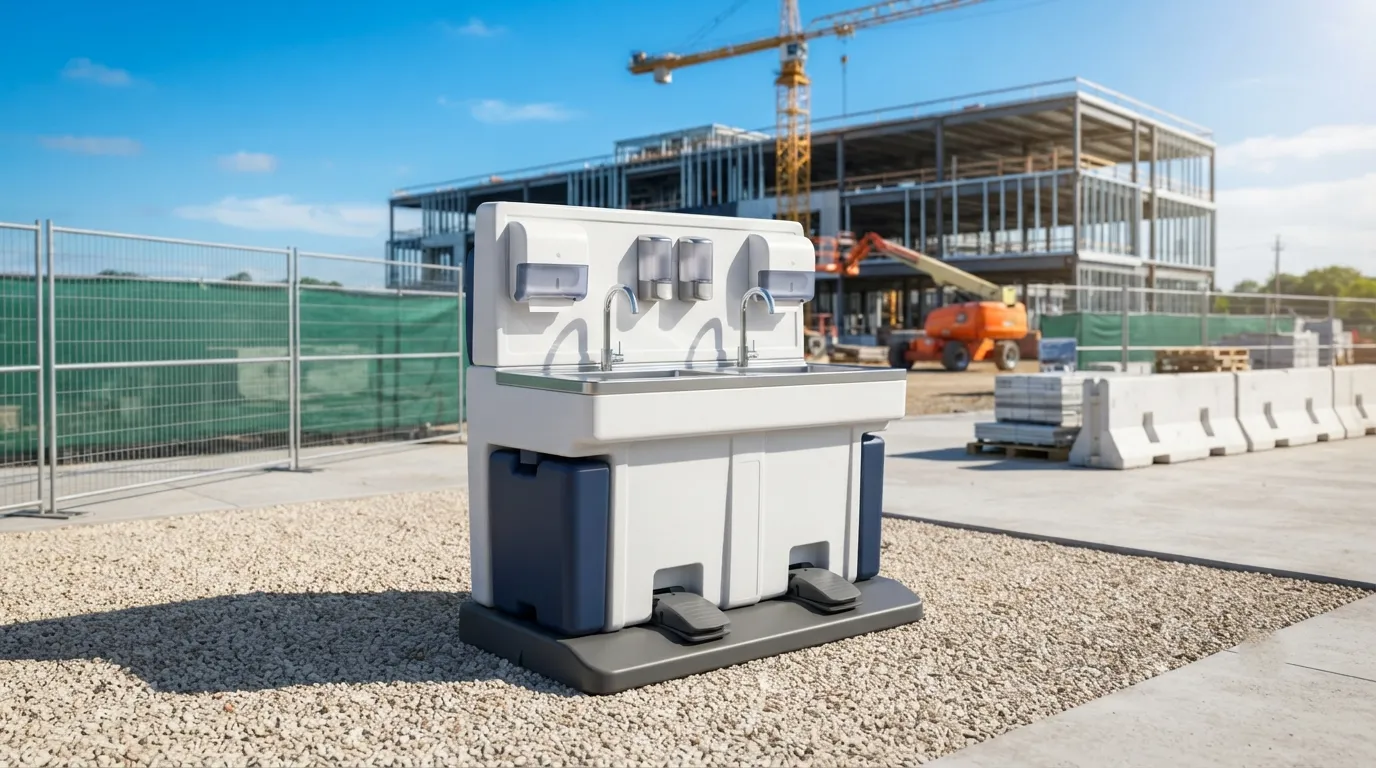
If a work crew is clearing debris and using paints, coatings or solvents during rebuild, OSHA 1926.51(f)(1) requires washing facilities for that contaminant exposure specifically, and 29 CFR 1910.141(d)(2) requires soap and towels, not hand sanitizer alone, at any washing station serving that crew. We stock portable sink rental units built for exactly that requirement.
| unit | duration | typical price |
|---|---|---|
| standard | day | $150 |
| standard | week | $200 |
| septic | day | $250 |
| service_fee | weekend | $700 |
Do You Handle ADA Access In Emergency Deployments?
Yes, and it's not optional. ADA Standards section 213.2 requires that at least 5 percent of a cluster of single-user units be accessible, with a minimum of one no matter how small the deployment. In a fast rollout it's easy to grab whatever's on the truck, but we hold back ADA accessible porta potty units specifically for emergency staging so that requirement is met from delivery day one, not added later.
Ground surfaces have to be stable and slip resistant under ADA Standards section 302.1, which matters when a site is muddy from flooding. Door openings need 32 inches clear under ADA Standards section 404.2.3, and the unit needs a 60 inch turning circle per ADA Standards section 304.3.1. Our ADA restroom requirements page breaks these down if you're coordinating a shelter or relief site in Largo and need to brief a facilities team fast.
Beyond toilets, disaster response often means storage container rental for supplies, temporary fence rental to secure a damaged structure, or a mobile office trailer rental for a command post. Largo sits close enough to Bardmoor, 4.8 miles south, and Seminole, 6.8 miles south, that staging equipment centrally keeps response times short across that whole radius. Check service areas for the full coverage map.
How quickly can you deliver after a storm hits Largo?
Most emergency requests move same-day or next-day, depending on road access. Call as soon as you know you need units. Blocked streets or downed lines can add time, so flag access issues when you request service.
Do disaster relief rentals cost more than standard rentals?
Emergency and weekend response carries a premium, generally $400 to $1,200 depending on scope, reflecting rush staffing and after-hours logistics. Standard daily and weekly rates apply once service settles into a normal rotation.
How many toilets do we need for a shelter or relief site?
OSHA 1926.51(c)(1) sets one toilet per 20 people as the baseline, scaling with headcount. Shelters with hand-labor cleanup crews may also fall under OSHA 1928.110's quarter-mile-walk standard. We size the count once you tell us expected occupancy.
Can you deliver if roads are still partially blocked?
Often yes, with an alternate route. Our trucks need about 60 feet of straight clearance to deliver, so tell us about debris, flooding or closures in advance so we can plan the approach.
What about handwashing if we don't have running water?
A handwashing station rental unit solves that fast. Under 29 CFR 1910.141(d)(2), soap and towels are required, not just sanitizer, so we stock stations that meet that standard from delivery.
Next step
Get a delivery date
Tell us the address, the dates and the headcount. We size the order and confirm the route.