
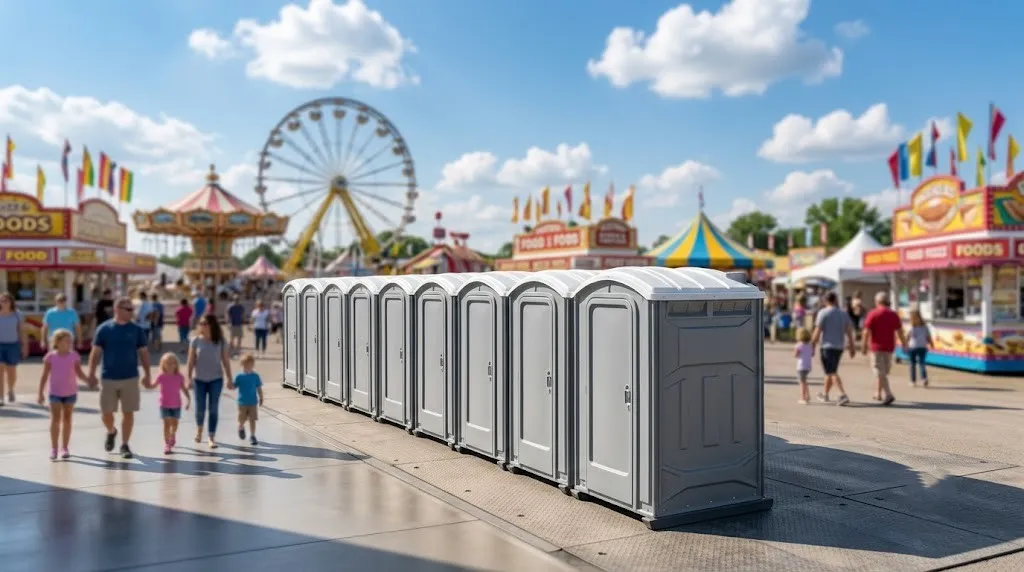
How many restrooms does a county fair need?
Start with attendance, then adjust for hours and alcohol. A single-day fair pulling 2,000 people across eight hours needs more capacity than the same crowd spread over a weekend, because bathroom trips cluster around meal breaks and dusk. Largo Porta Pros sizes fair jobs using the same logic laid out in how many porta potties do I need, then layers in event-specific spikes: livestock barns, grandstand shows, midway lines. OSHA 1926.51(c) sets a construction-crew ratio of one toilet per 20 workers, which is a fine floor for vendor and staff counts but too thin for public gate traffic. For the public side, most fair planners in Largo lean closer to one standard porta potty rental per 75 to 100 attendees once beer gardens are running. Add a few deluxe flushable porta potty units near VIP or sponsor tents, and at least one ADA unit per cluster under ADA Standards section 213.2, which requires 5 percent of clustered single-user toilets to be accessible with never fewer than one. If your fair runs a full weekend, price it against the porta potty rental per day and weekly bands before committing to a headcount, since longer runs change the per-day math.
What restroom options work best for a county fair in Largo?
Mixing unit types beats renting one style for everyone. Grandstand and midway crowds move fast and don't need much beyond a clean standard porta potty rental, while sponsor areas, judging tents and hospitality zones do better with a restroom trailer rental that has running water and mirrors. A 2 stall restroom trailer handles a small VIP tent; an 8 stall restroom trailer covers a full grandstand crowd without a line forming at intermission. Every cluster needs at least one ADA accessible porta potty with a 60 inch turning circle per ADA Standards section 304.3.1 and a door opening of at least 32 inches under ADA Standards section 404.2.3, plus a stable, slip-resistant approach per ADA Standards section 302.1. Livestock and 4-H barns near Largo often add a handwashing station rental at the barn exits, since 29 CFR 1910.141(d)(2) requires soap and towels or a dryer at wash stations, not just sanitizer. If food vendors are frying or using degreasers, pair that setup with a nearby grease trap pumping plan for the concession row, and keep a spare porta john rental staged behind vendor alley for staff use during peak hours.
| unit | duration | typical price |
|---|---|---|
| standard | event | $400 |
| ada | day | $230 |
| deluxe | day | $300 |
| trailer | event | $3,500 |
Prices above sit inside the measured range for each unit and duration; a multi-day fair often lands closer to the weekend or event band than a single day rate, so check porta potty rental cost before finalizing a layout.
Where should restrooms sit on the fairgrounds?
Placement decides whether lines form. Units belong along main walkways, near food courts and at both ends of the grandstand, never tucked behind a barn where nobody can find them. A porta potty placement guide covers ground clearance and setback basics, but the short version for a fairground: keep a 36 inch clear path to every unit per ADA Standards section 403.5.1, and leave enough room behind delivery zones for a service truck to maneuver, since a roll-off or trailer delivery needs about 60 feet of straight clearance behind the vehicle. Largo fairgrounds with grass or gravel lots should confirm ground stability before placement day, particularly for a heavier luxury restroom trailer unit. Lighting matters too. OSHA 1926.56(a) sets minimum illumination for work areas, and while that standard targets job sites, a fair running past sunset should apply the same logic near restroom rows; a light tower rental at each cluster keeps foot traffic safe after dark. If the fairgrounds sit inside city right-of-way or a shared parking lot, placement in the public right of way needs confirming with the City of Largo before delivery trucks show up. Fair organizers near Ridgecrest, 4.6 miles southwest, or Bardmoor, 4.8 miles south, often coordinate joint deliveries with Largo Porta Pros when running back-to-back weekend events.
How far in advance should we book fair restrooms?
Book as soon as the gate estimate firms up, ideally four to six weeks out. Fair season compresses trailer and ADA unit availability fast, and swapping a festival restroom rental order after vendor layouts lock in costs time nobody has that week.
Do we need ADA units even if the fair is on grass?
Yes. ADA Standards section 213.2 applies regardless of ground surface, and the approach path still needs to meet the stability requirement in ADA Standards section 302.1. Largo Porta Pros brings mats or leveling support when the lot isn't paved.
Can we add handwashing stations near food vendors?
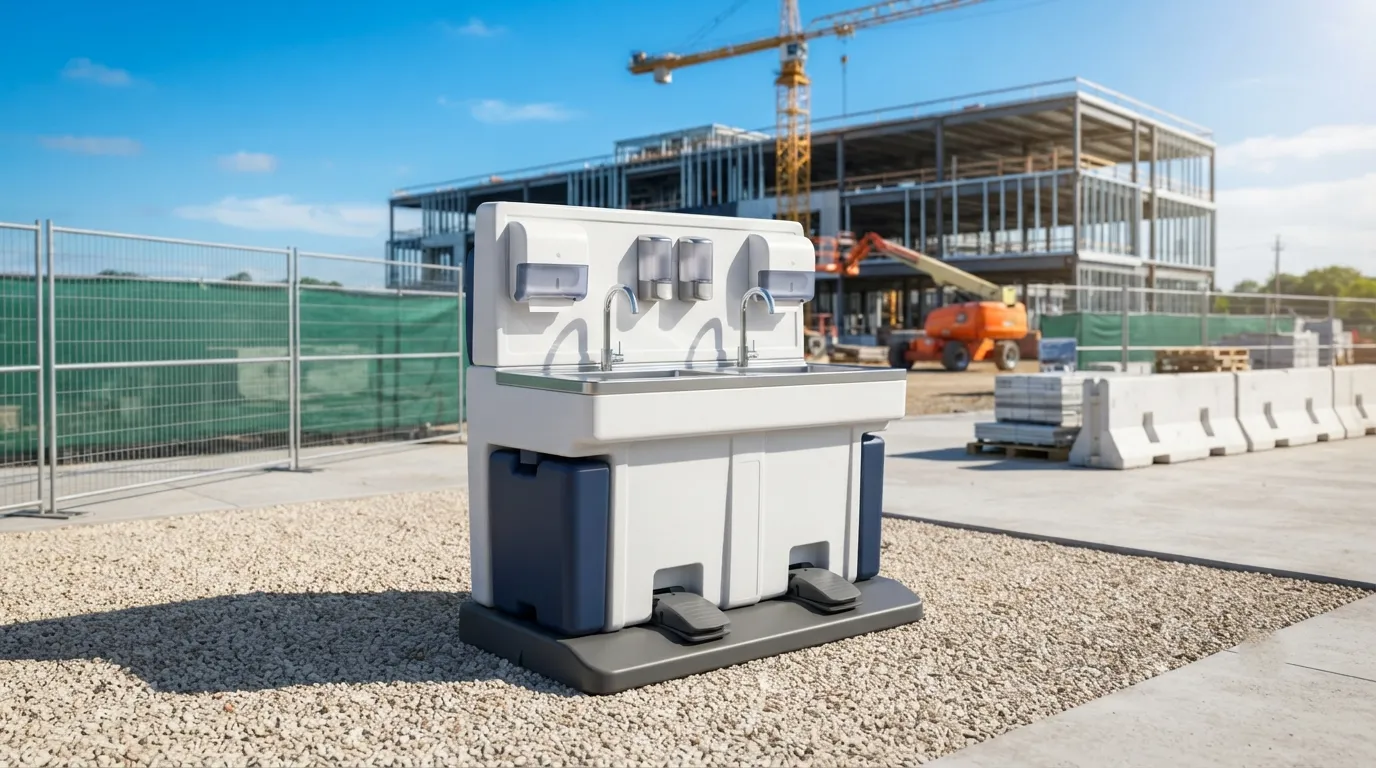
Yes, and most fairs should. A portable sink rental at each concession row satisfies 29 CFR 1910.141(d)(2) far better than sanitizer alone, since that rule specifically requires soap and towels or a dryer.
What happens if attendance runs higher than expected?
Largo Porta Pros keeps standby units on call during fair weekends specifically for this. Call ahead of the emergency porta potty rental line if a gate surge outpaces your original count; same-day swaps are easier when flagged early.
Does the fairgrounds need a dumpster too?
Most fairs do, especially with food vendors on site. A roll-off dumpster rental sized to your vendor count keeps the grounds clear under OSHA 1926.25 housekeeping principles, even though that standard targets job sites, not fairgrounds.
Next step
Get a delivery date
Tell us the address, the dates and the headcount. We size the order and confirm the route.